What must change before a firm can promise you an outcome.
25 August 2026

Firms are moving from selling hours to selling outcomes, and almost all the commentary is about what that means for the client. My interest is in the other side of it. Here is what has to change inside the firm making the promise, and the question I would ask before believing one.
The backbone nobody looks at until something breaks
Operations is usually the part of a business nobody talks about until something breaks. My remit covers the financial performance of the company, people and culture, delivery, and the systems, processes, and tooling that hold all of it together. When it works, it is invisible. When it does not, it is the only thing anyone can see.
My view is that operations either drive the growth or quietly caps it, and there is not much middle ground. An organisation can have the strategy, the pipeline, and the people, and still be held back by how it runs, because the operating model decides what a company is able to promise and then honour.
Which is why a change in how professional services firms price their work interests me more than a pricing change probably should.
What the shift looks like from inside the firm
Firms are shifting from selling hours to selling outcomes. In November 2025, McKinsey’s managing partner for the UK, Ireland, and Israel told Business Insider that about a quarter of the firm’s global fees now come from outcomes-based pricing. Whatever you make of that number, the direction it points in matches what I hear from clients, who are asking for certainty on the result rather than a rate card.
Almost everything written about this is about what it means for the buyer: better alignment, less exposure, a fee that follows the value. That is the straightforward half. The half I live in is what the promise does to the firm making it.
A promise like that takes one line in a proposal to write. What I have found is that very little behind that line survives it unchanged.
What actually changes
When we moved towards outcome-based, fixed-price delivery, I expected the commercial conversation to change. What I did not expect was how many separate mechanics had to move at the same time. Four in particular.
Each of these is an operating decision, and each one has a person on the other side of it.
The temptation I am wary of
There is a version of this role that would run the whole shift on metrics: tighten the estimate, compress the delivery, defend the margin engagement by engagement. Under an outcomes model that is genuinely tempting, because the pressure shows up sharply and in one visible place.
I would not run it that way. A COO driven purely by optimisation and cost cutting is too short-sighted, and I do not think it holds. You get the efficiency for a quarter or two. I do not think you get the growth, and you do not keep the people who were producing it.
At J4RVIS, people and culture sit under operations, and that is deliberate rather than an org chart accident. It means operations must answer for the human consequence of its own decisions. Every decision in technology is a human decision somewhere down the line, and understanding where the other person is coming from has solved more for me than pushing a change through ever has.
Two small examples, and neither is about adding process. I recently cancelled one of my own recurring meetings with the leads, because they needed that hour to do the work more than I needed the update. I also broke our annual goals into quarterly ones, so people could see what they were driving this quarter rather than in twelve months. Both changed what people were able to do the following week, and that is the measure I trust.
The question I would ask
I have come to judge a change by what became possible afterwards rather than by the fact that it happened. We rolled out Slack a while ago. The rollout itself was not the story. What people could suddenly do without having to ask anyone was.
The same test works from the buying side. If a firm offers you an outcome instead of a rate card, ask what changed inside that firm when it started pricing this way. How does it estimate now. Where does the risk actually sit. How does it decide an engagement was profitable. None of that is commercially sensitive, and it is not difficult to answer if the work has been done.
If the answer is that nothing changed, I would say you have been offered a pricing line rather than a promise. The mechanics underneath are unglamorous, and they are the part I would want to see.
Written by
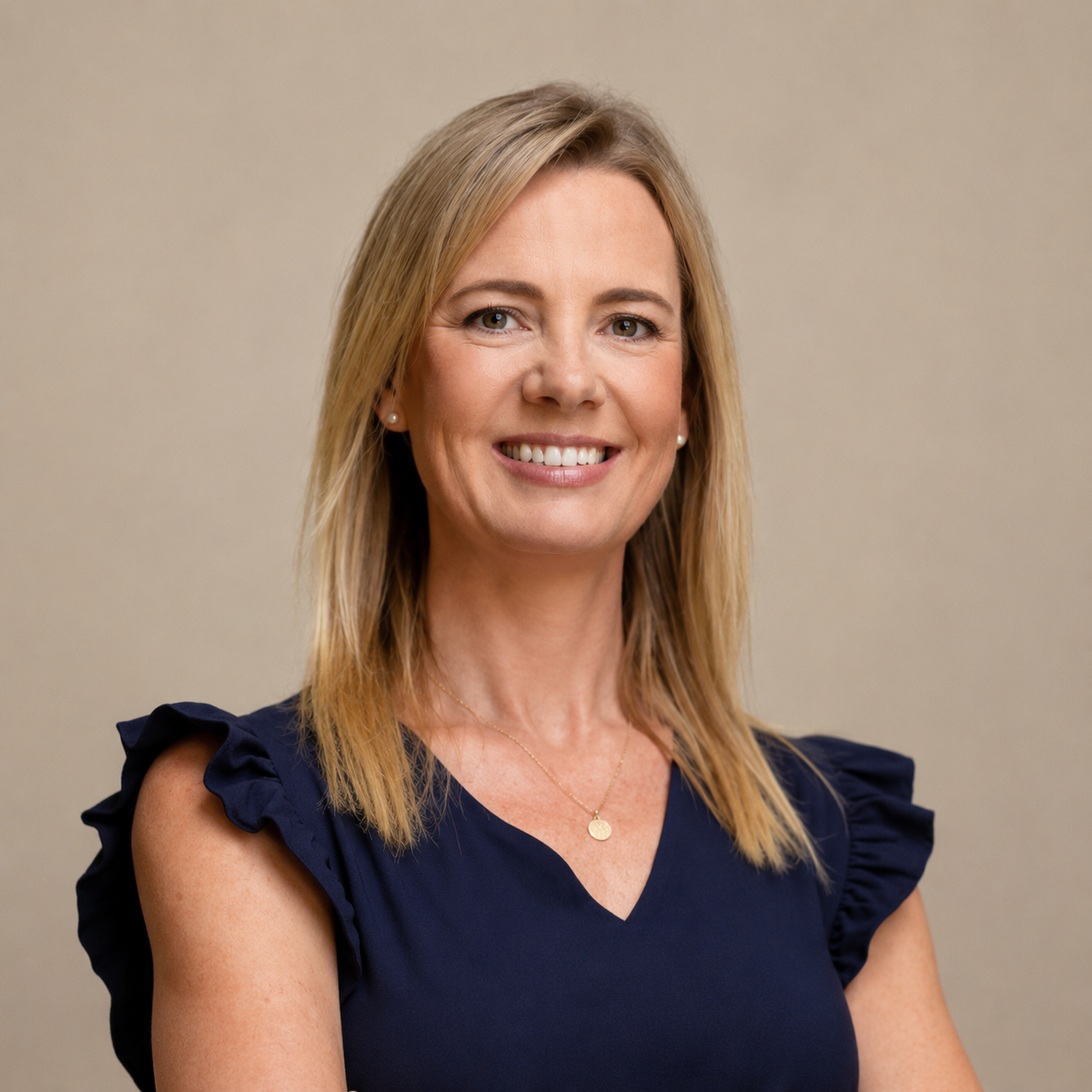
Anna Haeger
Chief Operating Officer
Anna is an experienced agile delivery and transformation leader with a background in management consulting and business analysis. She focuses on change, agile transformation, and building the capability that helps clients keep improving after we leave.
More from Anna HaegerSources
- Polly Thompson, “AI is reshaping how McKinsey makes money”, Business Insider, 17 November 2025. Source for the figure that about a quarter of McKinsey’s global fees come from outcomes-based pricing, attributed to Michael Birshan, managing partner for the UK, Ireland, and Israel. Verified on 25 August 2026 against the syndicated full text at https://finance.yahoo.com/news/ai-reshaping-mckinsey-makes-money-195132745.html (the Business Insider original sits behind a block for automated access).
- All other claims in this article are the author’s own first-hand observation.
:quality(74))
:quality(74))
:quality(74))
Want to talk it through?
Bring us the outcome you want to buy. We will tell you what has to be true inside both firms before anyone can promise it.
